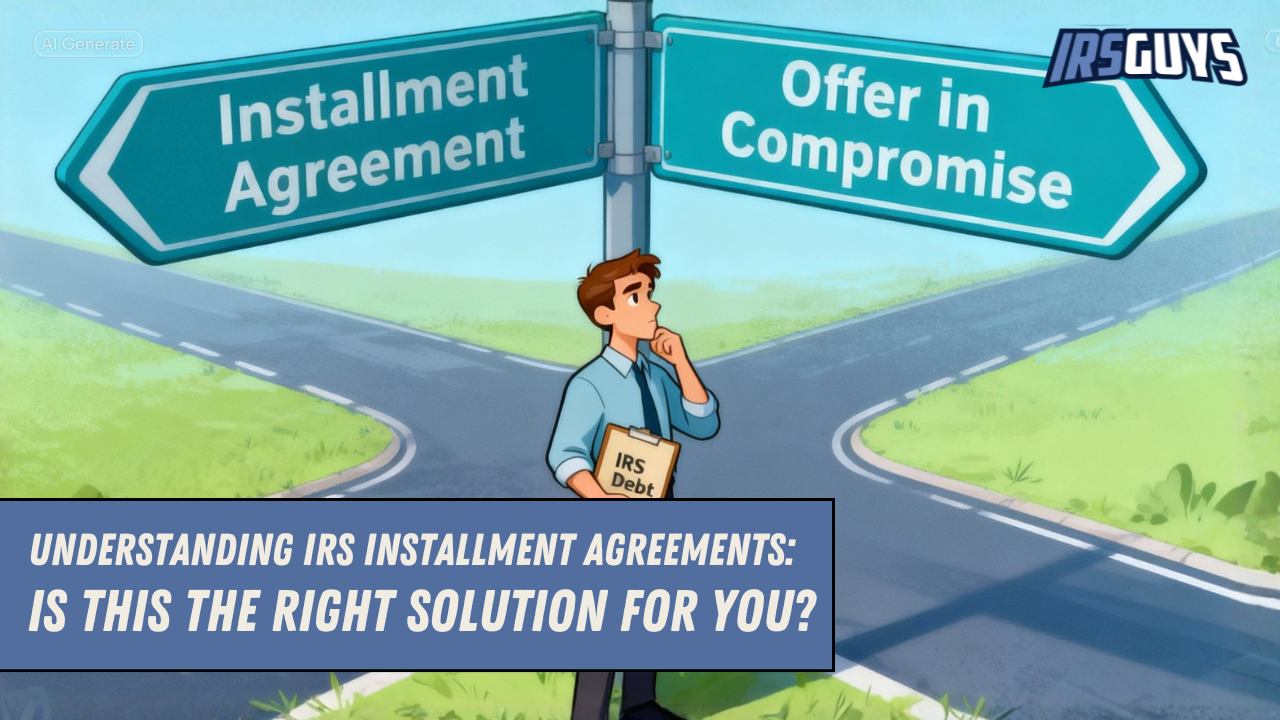
If you owe taxes and can’t pay the full amount right away, you may be wondering if an IRS Installment Agreement is the right solution for you. This program allows you to break down your tax debt into affordable monthly payments instead of paying everything at once. It also helps you avoid aggressive collection actions and mounting penalties.
For 2025, the IRS has introduced a Simple Payment Plan with higher debt limits and greater flexibility, making it easier for more taxpayers to qualify. However, the pressing question is whether the Installment Agreement is suitable for your situation. Let’s talk about it.
The Simple Payment Plan (The 2025 Update)
For most individual taxpayers, the Simple Payment Plan (which replaced the former Streamlined Installment Agreement in March 2025) is the best and easiest way to secure a formal resolution.
This plan is the IRS’s go-to option because it requires minimal administrative effort from both you and the agency.
Why This Plan Works for Most People
High Debt Limit: You qualify if your total amount owed (including the tax, penalties, and interest) is less than $50,000. This threshold covers the majority of individual tax debts.
Long Repayment Term: You are granted up to 10 years (120 months) to pay off the debt. This extended timeline ensures your monthly payments are manageable.
No Financial Check: Crucially, if your debt is under $50,000, the IRS does not require a full review of your assets, income, and expenses (Form 433). You can set up the plan quickly and without deep financial disclosure.
Is an Installment Agreement Right for You?
The answer hinges on your long-term financial reality. The IA is based on the assumption that you can eventually pay the full debt. If that assumption is false, you need a different solution.
The IA is the Right Solution If…
You Have a Cash Flow Problem, Not a Solvency Problem: You have steady income and assets, but simply don’t have the cash on hand to pay the entire balance today. The IA provides the necessary time (up to 10 years) to pay 100% of your liability in manageable chunks.
When to Choose a Different Path
If you face long-term financial hardship or a permanent inability to pay, the IA is not the best choice, as the interest and penalties will continue to grow the balance. You should investigate these alternatives:
Offer in Compromise (OIC)
Is it right for you? Yes, if you are permanently unable to pay the full debt due to limited income and assets before the collection statute expires.
Outcome: If accepted, you settle the debt for a fixed, lower amount (e.g., settling a $60,000 liability for $15,000, depending on financial analysis).
Currently Not Collectible (CNC) Status
Is it right for you? Only as a temporary emergency measure if you are in acute, severe financial hardship and cannot afford basic living expenses (housing, food, healthcare).
The Warning: CNC status does not stop penalties or interest from accruing. Your debt will continue to grow at the 7% compounded rate, making this a very expensive form of relief that merely delays collection efforts.
The Risk of Default
If you secure an IA, you gain protection from aggressive collection. But this protection vanishes if you miss a payment or fail to file and pay all future tax returns.
When you default, the IRS sends the CP523 Notice. This is the critical, final warning that signals two things:
Termination: The intent to terminate your Installment Agreement.
Intent to Levy: The explicit notice that the IRS intends to seize your wages, bank accounts, or other assets.
This notice provides a strict 30-day cure period. You must pay the past-due amount listed on the CP523 within those 30 days to save the agreement and prevent the levy.
If you cannot pay, you must file Form 12153, Request for A Collection Due Process (CDP) Hearing, within that same 30-day window. Filing this form is essential because it legally halts collection action while the IRS Office of Appeals reviews your case, preserving your right to appeal the proposed levy.
Bottom Line
The Installment Agreement is the definitive “right solution” for the majority of US taxpayers struggling with back tax debt. It provides a structured, predictable path to solvency while granting immediate administrative relief.
The key to success is prompt execution.
Act Fast: Your debt accrues interest daily.
Go Online: Apply for the Simple Payment Plan through your IRS Online Account.
Automate: Choose the Direct Debit option to save money and ensure compliance.
By taking these steps, you stabilize your financial future, minimize penalties, and replace the fear of the IRS with a controlled repayment plan.