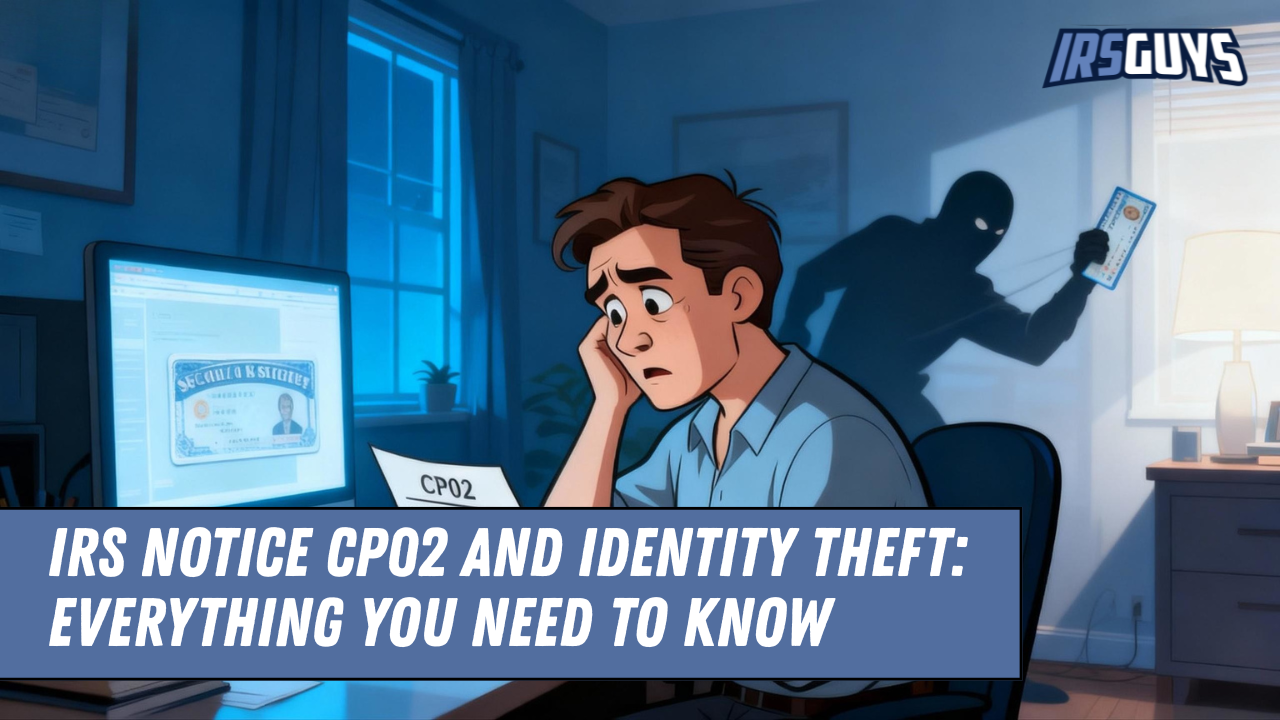
The sight of an IRS envelope demanding attention is stressful, but Notice CP02 holds a particular urgency. This notice is a critical administrative step that often signals one of two major problems: an audit of refundable credits or a warning that your identity has been stolen for tax fraud.
You must correctly diagnose the issue and respond by the deadline, or you risk losing your refund and facing severe penalties.
1. What is Notice CP02? (Audit vs. Fraud Trigger)
Notice CP02 primarily informs you that the IRS is auditing your claim for the Earned Income Tax Credit (EITC), which is one of the largest and most scrutinized refundable credits.
The EITC is frequently targeted by criminals because it is refundable. Identity thieves often file fraudulent returns, fabricating income to maximize the EITC using stolen Social Security Numbers (SSNs). The IRS automated systems flag this suspicious financial activity and issue the CP02 to put an immediate hold on processing your return and any resulting refund.
If you receive this letter but did not file the tax return referenced—or if an unknown dependent is listed—the CP02 is your first official notification that your identity has been compromised for tax fraud.
2. Your Immediate Action Plan: Verification is Key
Your response strategy depends entirely on whether you believe the EITC claim is legitimate (mistake) or fraudulent (ID theft). Regardless, you must act fast. Failure to respond will result in the denial of the EITC, requiring you to repay the claimed amount, and potentially imposing a severe 2-year or 10-year ban on claiming the credit in the future.
Essential Documents Checklist
Before initiating contact with the IRS, you must have these documents ready, as they are essential for either audit defense or identity verification:
- The CP02 notice itself.
- Your current and prior year tax returns (Form 1040).
- All supporting income documents, such as Forms W-2 or 1099, and Schedules C or F.
Execute the Response Strategy
- If the EITC Claim is Legitimate: If you filed the return, gather documentation to substantiate your claim, such as proof of residency and relationship to the qualifying child. Submit this supporting documentation via the Campus Correspondence Exam Document Upload Tool or mail/fax, ensuring you meet the notice deadline.
- If Identity Theft is Suspected: If you did not file the return, your priority is identity verification. Use the online Identity Verification Service (IVS) tool or call the dedicated hotline provided on your notice to report that the filing was fraudulent.
3. The Identity Theft Crisis: Be Prepared for Delays
If you successfully verify your identity online and confirm you filed the return, processing usually resumes quickly, often taking about six weeks.
However, if you confirm that fraud occurred, but the IRS cannot quickly resolve the issue, you must formally file Form 14039, Identity Theft Affidavit. Filing this affidavit is a crucial step that routes your case into the specialized Identity Theft Victim Assistance (IDTVA) organization.
This initiates a long and painful waiting period. The Taxpayer Advocate Service has reported that IDTVA cases are currently taking an average of nearly two years (22 months) to resolve. This dramatic delay means you could face a nearly two-year wait for your legitimate refund, highlighting the severity of the CP02 notice for identity theft victims. You should avoid filing duplicate Forms 14039, as this only causes further delays in the system.
4. Stop Future Fraud: Enroll in the IP PIN Program
Once you clear the immediate crisis, your primary goal must be securing your tax account permanently. The best tool for this is the Identity Protection PIN (IP PIN).
The IP PIN is a unique, six-digit number known only to you and the IRS. Any tax return (Form 1040, 1040-SR, etc.) filed with your SSN must include this IP PIN. If a thief attempts to file a return without it, the return is immediately rejected.
- Enrollment: Confirmed identity theft victims are automatically assigned an IP PIN. All other taxpayers can enroll voluntarily via the IRS Online Account after successfully verifying their identity (which typically involves providing a photo ID and a selfie). You must retrieve a new IP PIN every calendar year, reinforcing your account’s protection.
Bottom Line
The IRS Notice CP02 is not a problem that will disappear; it is a complex call to action. Whether you are defending a legitimate claim or reporting fraud, a swift, accurate response is the only way to avoid compounding penalties and years of refund delays. Use the IP PIN to secure your account and guarantee this crisis never happens again.