Key Takeaways
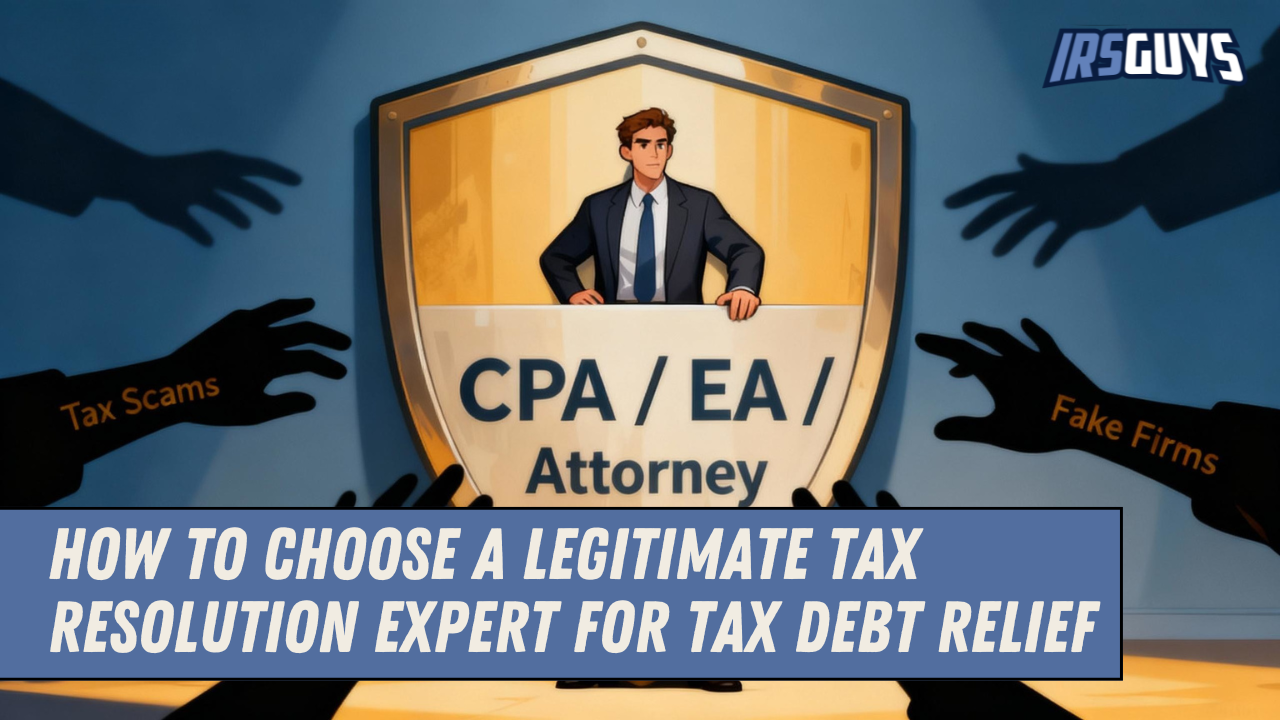
- The Big 3: Only three credentials (the Enrolled Agent (EA), Certified Public Accountant (CPA), and Tax Attorney) have unlimited representation rights before the IRS.
- Mandatory Oversight: These three professionals are subject to strict oversight of their ethics and competency by the IRS Office of Professional Responsibility (OPR) under Treasury Circular 230.
- Fee Transparency: Demand a clear, itemized fee structure upfront. Avoid firms that require large, non-refundable payments or employ confusing billing practices.
- Verify: Always verify the active license status of the individual professional assigned to your case using official government directories before signing a contract.
If you’ve received a Notice of Intent to Levy or a similar letter from the IRS, one of your first, critical steps is to find an expert to help resolve your tax debt. However, the process of finding and hiring a tax resolution expert can be overwhelming and confusing.
The market is saturated with aggressive advertising from “tax relief mills” that promise unrealistic settlements, often using confusing language or vague claims. They exploit your urgent need for help, leaving you vulnerable to excessive fees and potentially compounding your problems.
This guide is designed to cut through the noise and confusion. We define the three professionals authorized for comprehensive IRS representation and provide you with clear steps to vet your choice and avoid common fraud tactics.
Who Has Unlimited Representation Rights Before the IRS?
Only Attorneys, Certified Public Accountants (CPAs), and Enrolled Agents (EAs) hold unlimited representation rights before the IRS. This means they can represent you on any matter, including long-standing audits, complex collection actions, and formal appeals, regardless of who prepared the original return.
Do not settle for “limited representation rights.” Unlicensed preparers typically can only represent you regarding the specific tax return they prepared and signed. This minimal authority is completely inadequate for taxpayers facing serious IRS debt issues.
Accountability Under Circular 230
All professionals with unlimited representation rights are subject to the ethical and competency standards outlined in Treasury Department Circular 230. This document is your primary protection.
The IRS Office of Professional Responsibility (OPR) enforces Circular 230, interpreting the rules and investigating misconduct. The OPR has the authority to suspend or even disbar (revoke practice rights) any EA, CPA, or Attorney for violations. This mandatory federal oversight ensures a high level of accountability that unlicensed salespeople simply do not face.
Matching Your Need to the Right Expert
While all three professionals (EA, CPA, and Attorney) possess the necessary unlimited rights, they each bring different core specialties to the table. Choosing the right one depends on the complexity and nature of your tax debt problem.
The Enrolled Agent (EA)
An Enrolled Agent is federally licensed directly by the IRS after passing a comprehensive, three-part Special Enrollment Examination (SEE). Their training focuses almost exclusively on tax law, compliance, and
IRS resolution matters.
- Best For: EAs are the ideal choice for individuals and small businesses facing common administrative issues. They are highly skilled at requesting penalty abatement and negotiating formal installment agreements (payment plans).
- Cost: EAs are generally the most cost-effective option among the “Big 3.”
The Certified Public Accountant (CPA)
A CPA is a state-licensed professional with a broad scope covering auditing, financial accounting, and business consulting, in addition to tax.
- Strength: A CPA’s expertise lies in conducting a thorough financial review, and this typically includes analyzing your income, business structure, and financial statements. This capability is critical for complex financial reconstruction.
- Best For: Taxpayers with complicated financial structures, multiple income streams, or those needing forensic accounting support. A CPA is particularly valuable when structuring an Offer in Compromise (OIC), as their accounting background helps accurately present your financial health to the IRS.
The Tax Attorney (JD)
A Tax Attorney is a state-bar licensed legal specialist, bringing expertise in litigation, statutory interpretation, and legal advocacy.
- Tax Court Authority: Attorneys have the inherent right to represent you in U.S. Tax Court. This is essential in high-stakes disputes where an administrative appeal may fail, giving you continuity of representation that most EAs and CPAs cannot provide.
- Highest Protection (Privilege): Only an attorney can provide the robust Attorney-Client Privilege. This is crucial for high-risk cases (potential fraud, criminal tax issues), as it legally protects your confidential communications from compelled disclosure, a safeguard that the Tax Practitioner Privilege for EAs and CPAs does not offer in criminal matters.
- Best For: High-stakes disputes, criminal tax concerns, or needing immediate legal intervention to stop aggressive collection actions, such as wage garnishments.
Your Checklist for Avoiding Tax Relief Scams
The tax relief industry is, unfortunately, rife with aggressive scammers. Protecting yourself requires rigorous verification and the ability to spot common red flags.
Assessing Experience and Credibility
Before committing to any professional, evaluate their overall experience and credibility. Look for established professionals or firms with a transparent track record, often indicated by positive standing with organizations like the Better Business Bureau or by the longevity of their licensed practice. While aggressive marketers may have a loud presence, experienced practitioners prioritize proven expertise over outrageous claims.
Spotting the Red Flags
- The “Pennies on the Dollar” Guarantee: This is the most pervasive scam. The Offer in Compromise (OIC) program is legitimate, but the IRS warns that it is highly selective, and many taxpayers do not qualify. Be suspicious of any firm that guarantees OIC acceptance without first performing an extensive financial assessment.
- Dishonest Pricing and Sketchy Fees: Legitimate experts provide a clear, itemized fee structure and a reasonable refund policy. Scammers often demand large, non-refundable upfront fees, sometimes equating to the amount of cash you list on an asset inventory.
Red flags include confusing fine print that excludes necessary services, quoting a flat rate but including hidden monthly maintenance fees that prolong the process, or pressuring you to pay immediately. Always ask for details before committing and avoid any firm that isn’t completely transparent about its costs. - The “Bait and Switch” Tactic: Beware of firms advertising a “team of tax attorneys and CPAs” when the actual casework is delegated to unlicensed salespeople. You must verify the credentials of the individual professional handling your case.
Bottom Line
Successfully navigating IRS debt demands action, but it also requires smart professional selection. By focusing on the core federal requirement of unlimited representation rights and the mandatory oversight of Circular 230, you can filter out predatory firms. Match the appropriate professional (EA, CPA, or Attorney) to your specific needs, prioritizing experience and fee transparency. Use the official verification checklist to confirm their active license. Informed diligence is the most powerful tool you have to achieve genuine tax debt relief.
Resolve Your Tax Debt Without Choosing an Expert
Stop searching for expensive experts and start resolving your debt with IRS Guys. IRS Guys features “plug and play” tax resolution tools that automate the complex process of evaluating your financial situation. Currently under development, these tools are designed to help you confidently choose the best relief path, from OIC eligibility and RCP math to IRS installment agreements. Get expert results at a fraction of the cost with IRS Guys.
BOOKMARK THIS PAGE FOR THE LAUNCH OF IRS GUYS