
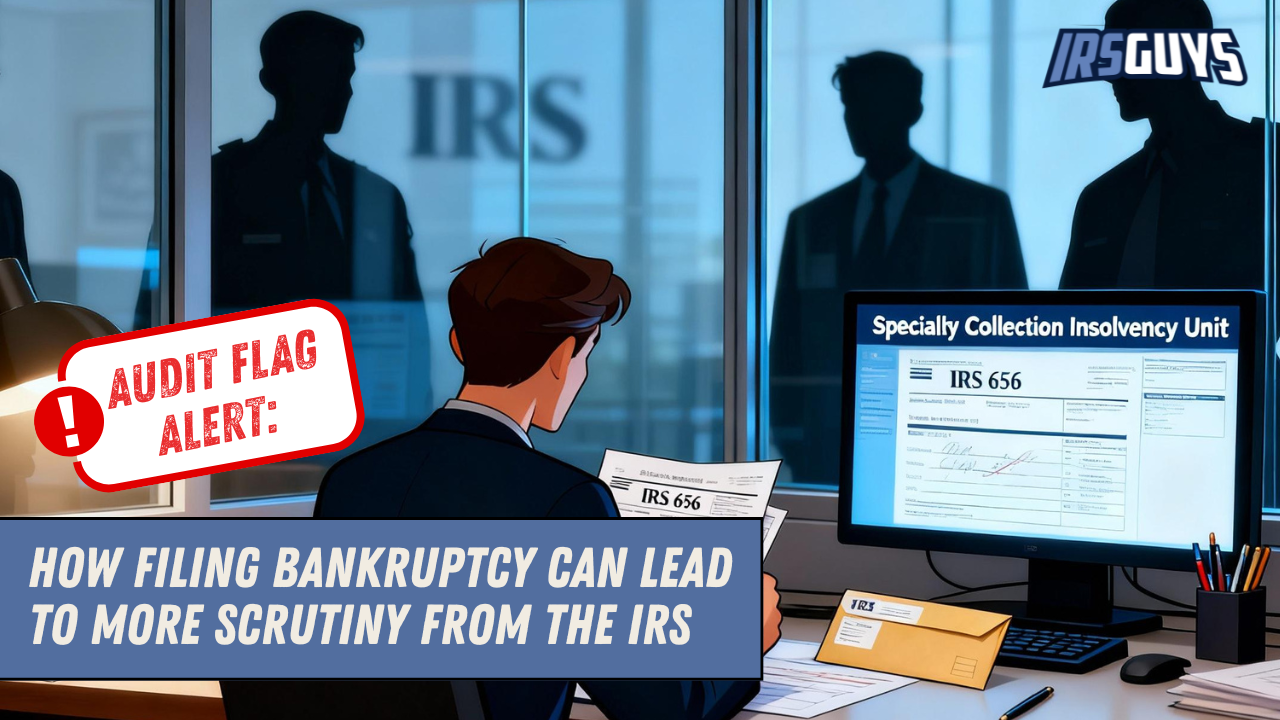
Filing for bankruptcy is one way to get a fresh start with your finances. When you file, the court issues an “automatic stay.” This is a legal order that immediately stops all creditors, including the IRS, from collecting old debts.
This process offers a huge relief, but it comes with a hidden risk. When you ask for bankruptcy protection, you are immediately flagging yourself for a closer look by federal tax authorities. If you failed to file tax returns or pay what you owed during your financial struggles, your bankruptcy petition acts as a major warning sign to the IRS. Ironically, the act of seeking relief forces you to be very careful with your tax duties. It makes an audit or a special review much more likely than it would be for a typical person filing taxes.
How Bankruptcy Re-Exposes Expired Audit Deadlines
Filing for bankruptcy starts with a crucial rule: the Bankruptcy Code requires it. If you file under Chapter 13, you must file all of your federal tax returns that were due in the four years before you filed your bankruptcy petition.
If you had not filed those returns before, the IRS usually could not audit you because the normal three-year deadline for assessing taxes, called the Statute of Limitations (SOL), had not yet started. But once you file those late returns because the court demands it, you immediately give the IRS the full three years to audit them.
This creates a critical, complex risk:
- Re-Exposed Years: You sacrifice the potential indefinite protection of the SOL for those delinquent years.
- Non-Dischargeable Debt: If the tax return for a specific year was filed less than two years before the bankruptcy petition date, the tax liability for that year is deemed non-dischargeable, meaning the court cannot eliminate it. The mandatory compliance action, necessary to keep your bankruptcy case alive, may accidentally solidify a tax debt you still must pay.
From Random Audit to Guaranteed Review
The extra review is not an accident; it’s a planned process. The moment you file a bankruptcy petition, the IRS moves your tax file to a special department called the Specialty Collection Insolvency (SCI) unit. This means your file is taken out of the general group of taxpayers.
This specialized unit’s main job is to monitor and ensure that debtors comply with all tax rules. Your file is now under active watch by specific IRS workers using special internal tracking systems. The chance of a random audit is gone. Instead, you have guaranteed, targeted oversight from tax professionals.
Also, the IRS uses systems such as the Litigation Transcript System (LTS) to track your tax obligations while your bankruptcy is ongoing. This tracking system immediately alerts the IRS if you fail to pay current taxes or any amounts you owe.
The Continuous Compliance Trap
The pressure doesn’t end with filing the old returns. During the entire bankruptcy process, the debtor must continuously file all required returns and pay all current taxes as they come due. Failure to maintain this continuous compliance gives the IRS the explicit right to request that the court convert the case to another chapter or dismiss the case entirely.
This continuous compliance mandate is enforced under the constant watch of the specialized Insolvency units, transforming the bankruptcy period into a multi-year audit risk environment.
The Long-Term Landmine: Cancellation of Debt and Form 982
Even after discharge, a long-term audit flag remains: the tax treatment of the debt that was cancelled. When a lender forgives debt (often documented on Form 1099-C), that cancellation is generally considered taxable income.
While debt discharged in a Title 11 bankruptcy is excluded from income, the taxpayer must file Form 982, Reduction of Tax Attributes Due to Discharge of Indebtedness, to officially document this exclusion. This is not a simple form. To get the tax benefit, the taxpayer must reduce certain valuable tax attributes, such as the tax basis of their property.
If the property basis is incorrectly reduced on Form 982, that error can follow the taxpayer for decades. If you sell that asset five or ten years later, an audit of the sale’s capital gain will implicitly require the IRS to verify the accuracy of the original Form 982 filing and the basis calculation. The complexity of this technical filing creates audit exposure that lasts for the life of the asset.
Bottom Line
Filing for bankruptcy is a big gamble. You are swapping unmanageable debt for intensive, targeted oversight by the federal government. The best way to defend yourself is to prepare carefully and take action before you file.
You must fix and file all those late tax returns before you submit your bankruptcy petition. You must also make sure all your tax filings after the petition are perfect. Because bankruptcy law and the tax code are so complex, getting help is essential. You need a professional who knows both tax law and bankruptcy to help you navigate this mandatory review and get a true fresh start.