Key Points
- Short-Term Window: Short-term tax debt is defined by the IRS as a balance you can pay off in full within 180 days.
- High Debt Threshold: Individuals and sole proprietors can manage up to $100,000 in debt using simple automated tools.
- Cost Savings: Hiring a tax debt relief attorney often costs $1,500 to $3,500 for a simple payment plan, whereas online setup for short-term debt is $0.
- Instant Results: Automated “plug-and-play” tools provide immediate approval, stopping IRS collection stress in minutes rather than weeks.
- Administrative vs. Legal: Most short-term issues are administrative (filling out forms), not legal (fighting in court), meaning professional legal counsel is often redundant.
If you just received a scary notice from the IRS saying you owe money, your first instinct might be to panic. Many people think they immediately need to hire a high-priced tax debt relief attorney to protect their bank accounts or homes.
However, for most people facing “short-term debt,” a lawyer is an unnecessary expense. If you owe the IRS but have a plan to pay it back within six months, the government has already built a “fast track” for you to solve the problem yourself. By using a simple “plug-and-play” tool, you can resolve your tax issues legally and quickly without paying thousands in legal fees.
What is Short-Term Tax Debt?
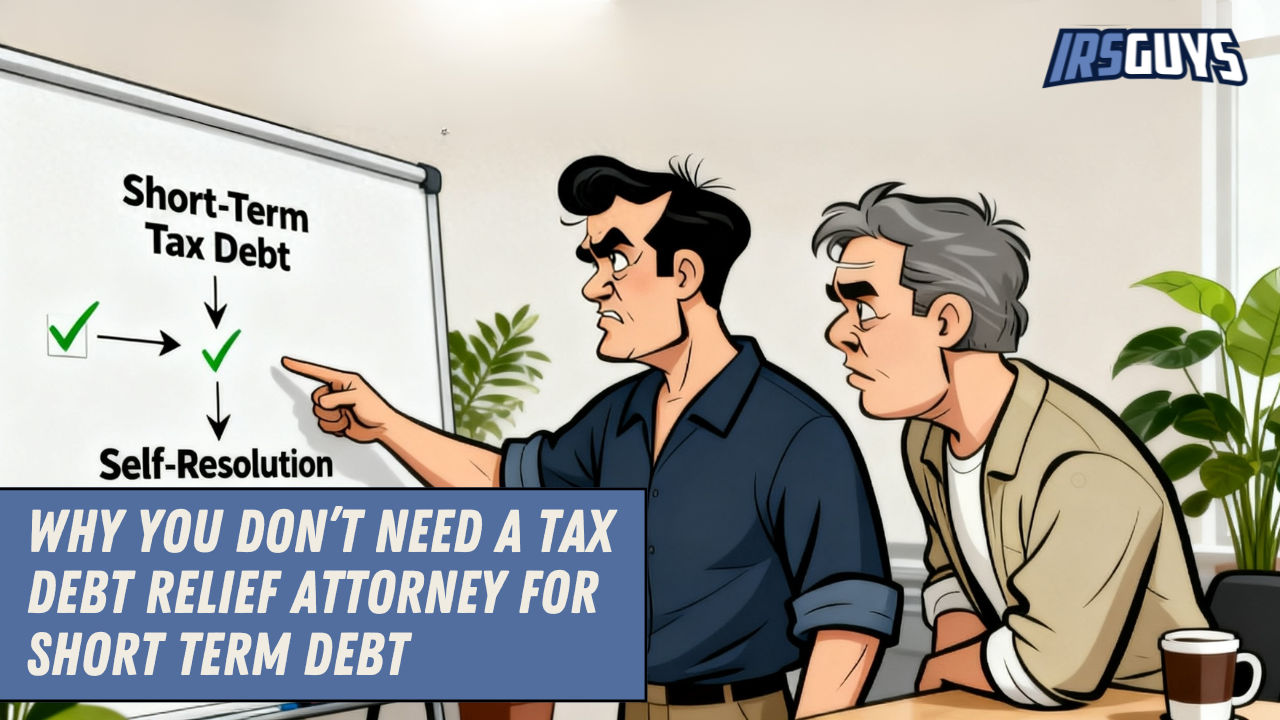
The IRS has a very specific category for debt that can be paid quickly. They call this a “Short-term payment plan.” To qualify, you must be able to pay your total balance—including tax, penalties, and interest—within 180 days.
For individual taxpayers and self-employed professionals, the limits are surprisingly high. You can often set up these plans yourself if you owe less than $100,000. Because the IRS wants its money quickly, they make this 180-day extension very easy to get. It is essentially an “administrative” task, meaning it’s just about clicking the right boxes, not arguing complex points of law.
The Real Cost of a Tax Debt Relief Attorney
Hiring a lawyer to handle a simple 180-day extension is like hiring a master chef to boil an egg. You are paying for a level of expertise you don’t actually need for this specific task.
Tax attorneys typically charge between $200 and $600 per hour. Even if they offer a flat fee to set up a payment plan, you could be looking at a bill for $1,500 to $3,500. If you owe $10,000, paying a lawyer $2,500 to “help” means you’ve just increased your total debt by 25% before you’ve even paid the IRS a single penny.
In contrast, the IRS charges a $0 setup fee for short-term payment plans requested through their online tools.
Why Automated “Plug-and-Play” Tools are Better for Small Debt
Using a digital tool instead of a person-to-person service offers three major advantages for short-term debt:
- Speed: When you hire an attorney, they have to file paperwork and wait for the IRS to respond. This can take weeks. An automated tool gives you immediate notification of approval.
- Accuracy: Automated systems pull data directly from the IRS or allow you to upload your documents. This stops human errors, like typos in your Social Security number, which can delay your case.
- Control: You don’t have to wait for a phone call back from a busy law firm. You can log in, see exactly what you owe, and click “submit” to stop the collection clock.
When Should You Actually Hire a Lawyer?
While 90% of tax problems can be solved without an attorney, there is a “Danger Zone” where you definitely need one. You should look for a tax debt relief attorney if:
- The IRS is investigating you for tax fraud or a crime.
- You are being audited and the IRS says you owe more than $50,000.
- A “Revenue Officer” has been specifically assigned to your case and is visiting your home or office.
- You owe “Trust Fund” taxes (unpaid payroll taxes for your employees).
If none of those apply to you, and you just need a few months to pay off a balance, you are likely wasting your money on legal representation.
Frequently Asked Questions
Is the 180-day plan really free? Yes. The IRS does not charge a “user fee” or “setup fee” for a short-term payment plan of 180 days or less. However, interest and late-payment penalties still grow until the debt is paid in full.
Will the IRS stop “collecting” while I’m on a plan? Generally, yes. Once you have an approved agreement, the IRS is prohibited from “levying” (taking money from) your bank account or wages as long as you make your payments.
Can I set up a plan if I haven’t filed my taxes yet? No. To be eligible for any IRS payment plan, you must have filed all your required tax returns first.
What if I owe more than $100,000? If you owe more than $100,000, you will likely be ineligible for the automated online tool and may need to provide more detailed financial information to the IRS.
Bottom Line
Dealing with the IRS is scary, but for short-term debt, the solution is simple math, not a courtroom battle. That is why IRS Guys is designed to help you resolve your tax problems legally and efficiently.
The goal is to save your cash for what matters: paying off the balance and moving on with your life. Save the expensive attorneys for the “Danger Zone” and use IRS Guys to take control of your taxes.
A Faster Way to Fix IRS Problems
Tax relief shouldn’t be a long, complicated process. We are developing IRS Guys to give you “plug and play” tools that simplify IRS resolution. Instead of a person-to-person service, our automated platform will help you calculate penalty abatement or find a structured payment plan that fits your budget. We are still building these tools, but they will soon be ready to help you take control of your taxes.
BOOKMARK THIS PAGE SO YOU DON’T MISS THE LAUNCH!!