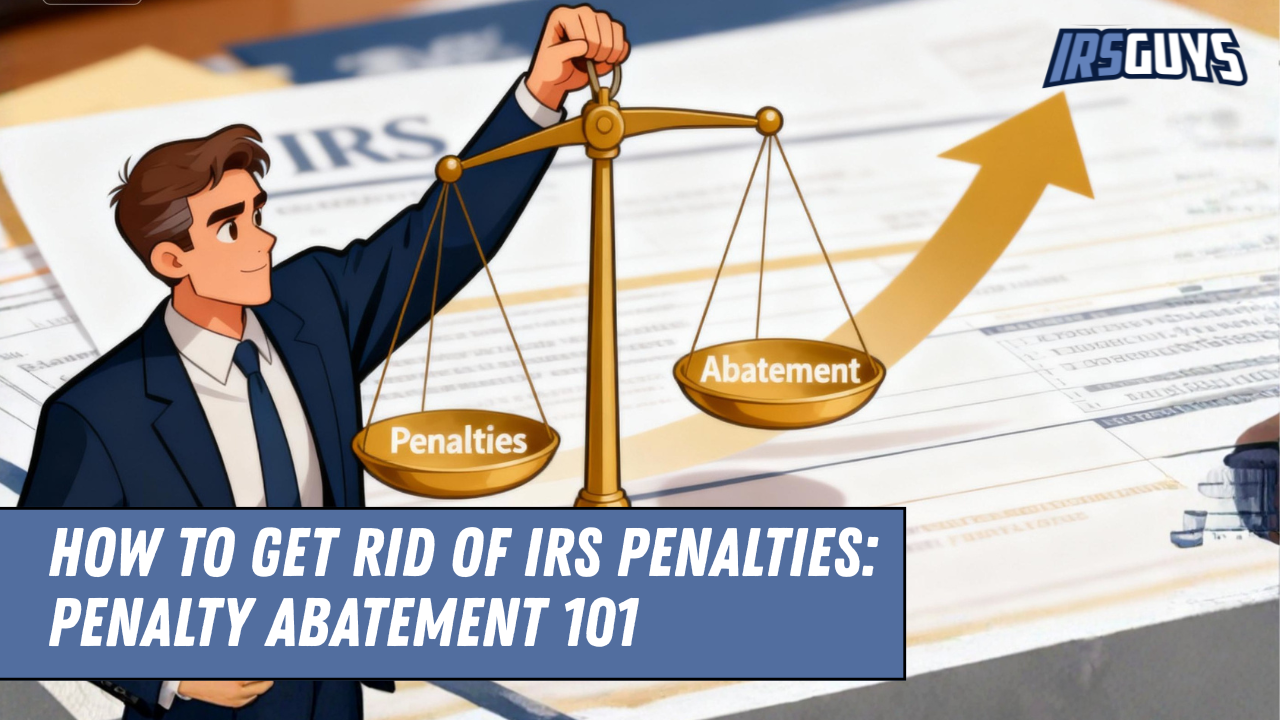
IRS penalties are administrative tools designed to encourage taxpayers to file accurately, file on time, and pay what they owe. But what happens when you miss a deadline due to circumstances beyond your control, or simply make a one-time mistake after years of perfect compliance?
Fortunately, the IRS provides several legal avenues to remove or reduce assessed penalties through a process called penalty abatement. To successfully get rid of IRS penalties, you need to understand the three primary types of relief available and the strategy for requesting them.
1. The Easiest Path: First Time Abate (FTA)
The First Time Abate (FTA) waiver is the most straightforward route to penalty relief. It is an administrative concession that grants one-time forgiveness to compliant taxpayers without requiring a subjective review of complex circumstances.
FTA relief is available for the primary delinquency penalties: Failure to File (FTF), Failure to Pay (FTP), and Failure to Deposit (FTD).
Do You Qualify for FTA?
To qualify for this one-time waiver, you must meet strict compliance history criteria:
- Clean Penalty Record: You must generally not have received any prior penalties for the three tax years immediately preceding the year you were penalized.
- Compliance History: You must have filed all required returns for the preceding three tax years.
- Current Compliance: Your tax liability must be paid in full, or you must be current on an approved payment arrangement, such as an Installment Agreement.
If you qualify, FTA is the quickest way to relief, as the decision is based purely on your account history, not a written narrative.
2. The High Bar: Reasonable Cause (RC)
If you don’t qualify for the one-time FTA waiver, you must request relief under the more challenging Reasonable Cause (RC) standard. RC requires you to demonstrate that you exercised “ordinary care and prudence” but were nevertheless prevented from complying by unforeseen factors outside of your control.
Acceptable Reasons (Evidence Required)
RC is determined on a case-by-case basis. Acceptable reasons typically involve severe external factors that can be objectively documented :
- Medical or Family Tragedy: The death or serious illness of the taxpayer or an immediate family member shortly before a deadline, causing emotional distress or logistical disruption.
- External Destruction: Natural disasters, fire, or civil disturbances that destroy records or disrupt the taxpayer’s ability to operate.
- Inability to Obtain Records: A documented inability to determine the amount of tax due because essential records were inaccessible for reasons beyond your control.
Reasons That Typically Fail RC
The IRS generally rejects abatement requests based on a perceived failure to exercise ordinary care and prudence :
- Reliance on a Tax Professional: You are ultimately responsible for timely filing and payment, even if you hired a tax preparer. Relying on a professional is generally not accepted as Reasonable Cause for abatement.
- Lack of Knowledge: Lack of general knowledge regarding tax law or filing requirements is not a valid reason for abatement.
- Simple Oversight: Clerical errors, simple mistakes, or general oversight are typically rejected as failing to meet the required standard of prudence.
3. How to Request Abatement: The Strategic Approach
Your approach to requesting relief significantly impacts your chance of success and the speed of resolution:
- Call First (Prioritize FTA): The most effective initial step for FTF, FTP, and FTD penalties is to call the toll-free number on your IRS notice. This is crucial because the IRS representative can instantly review your account for FTA eligibility and often approve the relief on the spot, bypassing the need for a detailed written submission.
- Written Request (For Complex RC Claims): If relief is denied over the phone or if your case involves complex RC factors, you must submit a written request. You can use a detailed statement or Form 843, Claim for Refund and Request for Abatement. Form 843 is the official form and is mandatory if you have already paid the penalty and are requesting a refund.
4. The Critical Warning: Interest vs. Penalty Relief
Many taxpayers confuse the abatement of penalties with the relief of interest. Understanding the distinction is essential:
- Interest on Penalties: If your penalty is successfully removed (via FTA or RC), the interest that accrued on that penalty amount is automatically reduced or removed.
- Interest on Tax Debt: Penalty abatement does not impact the interest accrued on the underlying tax liability. Interest continues to accrue on the tax principal until that principal amount is paid in full.
Action Tip: To minimize your total cost, pay the underlying tax liability immediately, even if your abatement request is pending. This halts the daily accumulation of interest on the tax debt.
Bottom Line
Successfully getting rid of IRS penalties requires a targeted strategy. Start with the phone call to secure the quick win of the FTA waiver. If you must proceed to Reasonable Cause, ensure your documentation proves that you were diligent, prudent, and the non-compliance was truly unavoidable.
If your abatement request is denied, you have a strict 30-day deadline from the date of the denial letter to file a protest with the IRS Office of Appeals. This appeal provides a final opportunity for impartial human review of your complete circumstances. Don’t forfeit your right to relief—be proactive, strategic, and documented.
Take Control with IRS Guys
Tired of complex paperwork? IRS Guys is coming soon to provide automated, easy-to-use resources for handling IRS debt. Whether you need a structured payment plan or a path to penalty abatement, our tools give you the strategy you need without the headache.
BOOKMARK THIS PAGE SO YOU DON’T MISS THE LAUNCH!!