Key Takeaways
- Filing Form 12153 within 30 days of receiving an IRS levy or lien notice immediately pauses collection activity.
- This form requests a Collection Due Process (CDP) hearing, where you can challenge the levy or propose payment options.
- Missing the 30-day window limits your rights and allows the IRS to continue enforcement.
When the IRS sends a Final Notice of Intent to Levy or a Notice of Federal Tax Lien, you have just 30 days to respond before they can move forward with taking money from your wages or bank accounts.
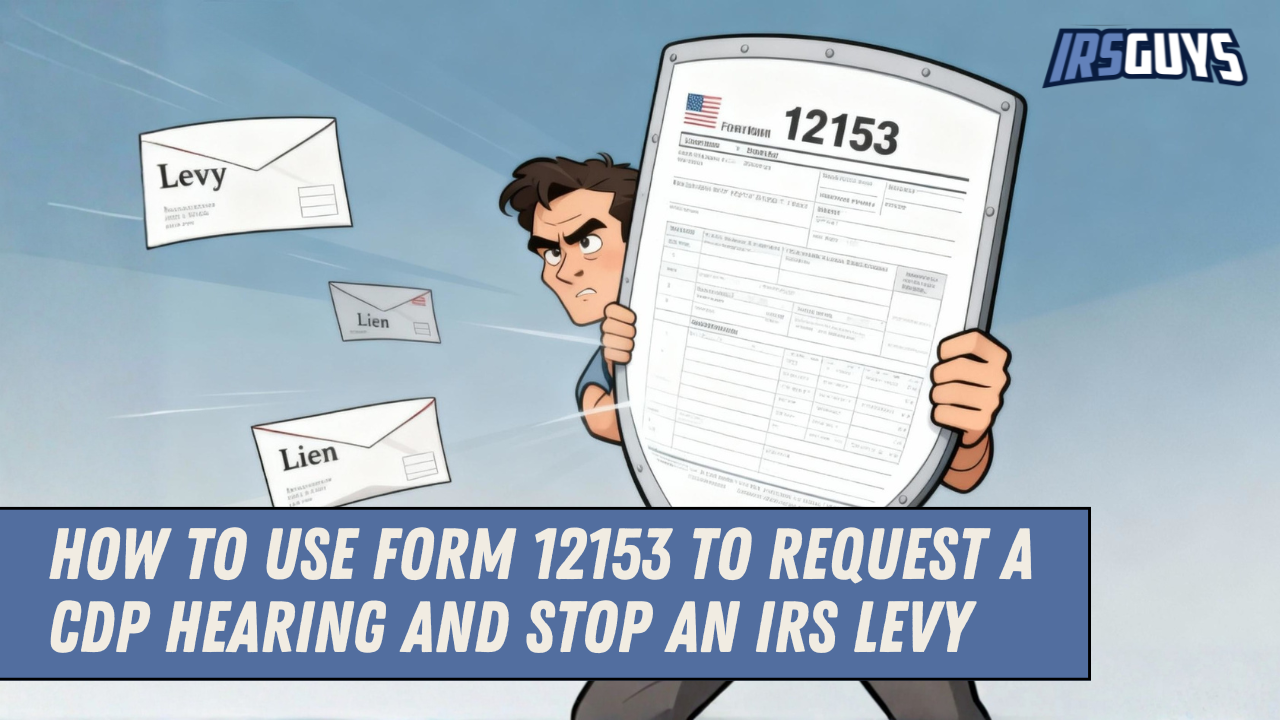
That’s where Form 12153 comes in. It is the single form that can pause all IRS collection activity while you fight for your case to be heard. By submitting this form, you are not just asking for time; you are activating your legal right to a Collection Due Process (CDP) hearing.
This hearing gives you a chance to explain your situation, challenge the levy, and propose realistic options like a payment plan or Offer in Compromise. In other words, Form 12153 is your shield. So, let’s talk about how to use it.
What Is a CDP Hearing?
A Collection Due Process (CDP) hearing is your chance to formally challenge IRS collection actions before they happen. It’s part of your taxpayer rights, and it ensures the IRS doesn’t move forward without hearing your side.
Here is how it works:
The hearing is handled by the IRS Independent Office of Appeals, not the same department that issued the levy.
During the hearing, you can:
- Dispute the levy or lien itself
- Propose a payment plan or Offer in Compromise
- Argue that the IRS made an error or didn’t follow proper procedures
- Request a pause due to financial hardship
Once you request a CDP hearing by filing Form 12153, the IRS must stop collection actions (no levies and garnishments) until your case is resolved.
When You Should File Form 12153
Timing is everything. You have 30 days from the date on your levy or lien notice to file Form 12153 and request a CDP hearing.
The notices that trigger this right typically include:
- Letter 1058 or LT11: Final Notice of Intent to Levy
- CP90: Intent to Seize Assets for Unpaid Taxes
- CP91/CP298: Notice of Intent to Levy Social Security benefits
Filing within that 30-day window gives you full CDP rights, including:
- Immediate suspension of collection activity
- The opportunity to appeal an unfavorable decision to Tax Court
If you miss the deadline, you can still request an Equivalent Hearing within one year, but the IRS can continue to collect during that time.
How to Complete and Submit Form 12153
Here’s a step-by-step breakdown of how to properly fill out and submit Form 12153 to protect yourself from an IRS levy.
Step 1: Download the Form
You can find Form 12153 on the IRS website at https://www.irs.gov/pub/irs-pdf/f12153.pdf.
Print a copy and read the instructions carefully before filling it out.
Step 2: Fill Out Your Information
Provide your full name, address, Social Security number (or Employer Identification Number), and contact information. List the tax periods and types of tax listed in your levy notice.
Step 3: Indicate the Type of Action
Check the box for the action you are appealing (Levy, Lien, or both).
Step 4: State Your Reasons for Requesting a Hearing
This section is key. Be clear and specific. Common valid reasons include:
- You’ve already paid the tax balance in full.
- The IRS made a mistake or didn’t follow procedure.
- You want to set up a payment plan or an Offer in Compromise.
- The levy would cause financial hardship.
If you are unsure how to word this section, IRS Guys can help you craft a clear and strategic response.
Step 5: Sign, Date, and Send to the Correct Address
Unsigned or incomplete forms are automatically rejected. Send the completed form to the address listed on your levy or lien notice. It varies depending on your state and IRS office.
Use certified mail or fax to ensure proof of delivery. Keep copies of everything you send.
What Happens After You File Form 12153?
Once the IRS receives your Form 12153, all levy and collection activity must stop while your hearing is pending. You’ll receive a confirmation letter and a hearing date from the IRS Independent Office of Appeals.
During the hearing, you’ll have the opportunity to:
- Present your case and supporting documents.
- Propose an alternative resolution (payment plan, settlement, or delay).
- Demonstrate financial hardship.
If the appeals officer agrees with your position, the levy will be lifted or modified. If not, you can appeal further to Tax Court.
Bottom Line
An IRS levy letter is intimidating, but it’s not the end of the world. Filing Form 12153 within 30 days gives you a powerful way to stop collection, request a fair hearing, and find a resolution that fits your financial reality.
Don’t wait until the IRS reaches into your bank account. File the form and stop the levy.
Get Ready to Take Control With IRS Guys
We’re putting the finishing touches on IRS Guys right now. Bookmark this page today so you’re among the first to resolve your tax debt at a fraction of the cost when we launch.
BOOKMARK THIS PAGE NOW