Key Takeaways
- An IRS levy letter means the IRS intends to seize money from your bank accounts, wages, or other property to collect back taxes.
- You still have time to act (the IRS must give you 30 days to act before the levy takes effect).
- Paying your balance, requesting a payment plan, or filing an appeal can stop the levy.
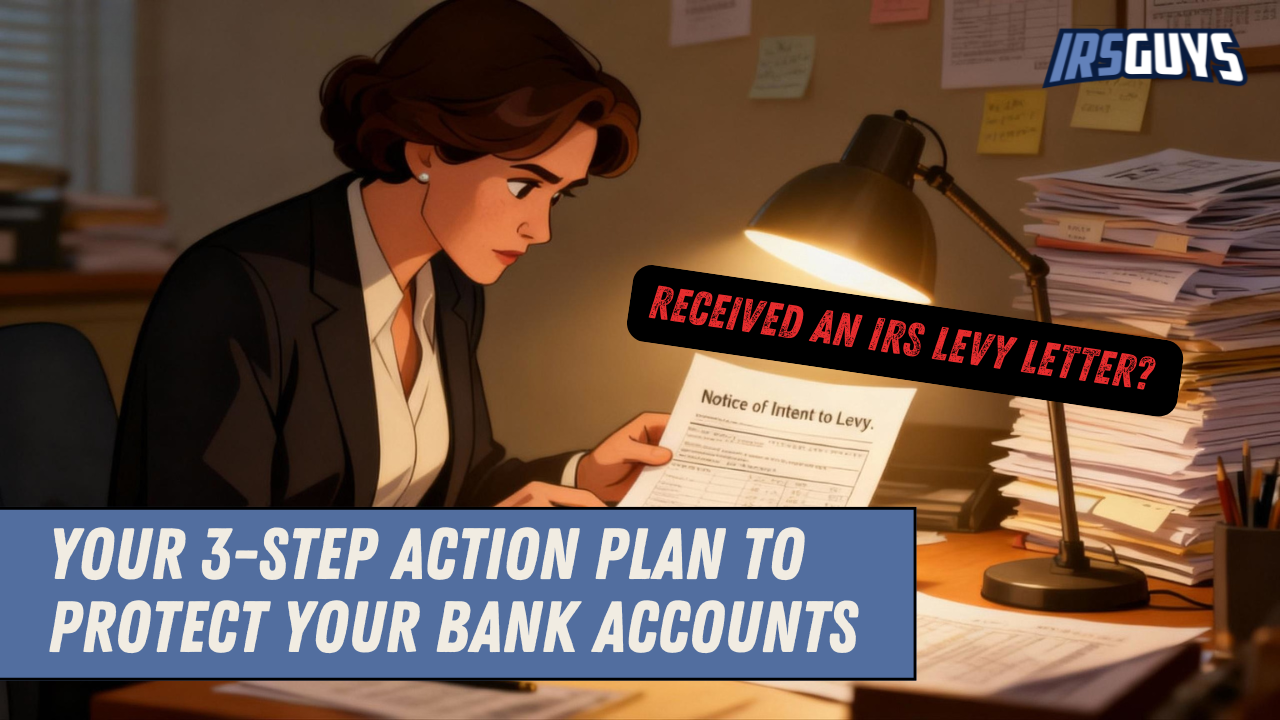
If you’ve just opened a letter titled “ Notice of Intent to Levy” from the IRS, your heart probably dropped. It’s scary to imagine your paycheck or bank account being taken overnight. But here’s the truth: even though an IRS levy letter is serious, you still have time and options (if you act fast).
An IRS levy doesn’t happen out of nowhere. The agency sends several warning notices before taking money from your account or wages. That means if you’ve received this letter, it’s your final chance to fix the problem before the enforcement begins.
This 3-step action plan will help you understand what the letter means, what to do next, and how IRS Guys can step in right away to protect your finances.
Step 1: Don’t Panic, but Don’t Wait
An IRS levy letter doesn’t mean money will be taken today, but it does mean the IRS intends to start soon. Typically, you have 30 days from the date of the notice to take action before the levy begins.
The most common notices include:
- CP504: Warning that the IRS may seize your state refund and other assets.
- LT11 or Letter 1058: The final notice before the IRS can levy your bank account or wages.
This is your window to respond, appeal, or make payment arrangements. Once the 30 days pass, the IRS can contact your bank and withdraw funds directly.
Here’s what you should do immediately:
- Read the letter carefully (note the amount owed and the response deadline).
- Do not ignore it: Waiting even a few weeks can lead to frozen bank accounts or garnished wages.
- Contact an expert tax debt relief service like IRS Guys for help.
Step 2: Take Quick Action to Stop the Levy
The IRS doesn’t want to seize your property if it can avoid it, but they need assurance that you’ll resolve your balance. There are several ways to stop or delay alevy, depending on your situation.
Pay the Balance in Full
If you can afford it, paying your full tax balance immediately stops the levy process. Once the IRS receives payment, they release the levy and confirm in writing that no further action will be taken.
Set Up a Payment Plan
Most taxpayers can qualify for an installment agreement. This lets you pay your tax debt over time in monthly installments. As soon as your plan is approved, the IRS halts all levy activity.
File an Appeal (Form 12153)
If you believe the levy is unfair or incorrect, you can request a Collection Due Process (CDP) hearing within 30 days of the notice date. While your appeal is pending, the IRS cannot enforce the levy.
Submit an Offer in Compromise
If you can’t afford to pay the full amount, an Offer in Compromise (OIC) allows you to settle your tax debt for less. Submitting an OIC also pauses levy enforcement while your offer is under review.
Each option has strict rules and deadlines, and missing one detail can lead to rejection or delay. That’s why most taxpayers choose to rely on expert tax debt resolution services like IRS Guys.
Step 3: Get Professional Help Immediately
When an IRS levy letter arrives, time is your most valuable resource. The sooner you act, the easier it is to stop the levy before your bank is contacted.
IRS Guys can guide you through:
- Contacting the IRS directly to request an immediate hold on collection activity.
- Negotiate payment options that fit your financial situation.
- Request a levy release if your bank account or wages are already affected.
- File appeals or Offers in Compromise to stop further enforcement.
What Happens If You Ignore the Letter?
It’s important to understand what’s at stake. If you ignore an IRS levy notice:
- The IRS can contact your bank and withdraw money directly from your account.
- Your employer may be ordered to garnish your wages.
- The IRS can place a lien on your property or assets.
Once this happens, reversing the damage becomes much harder, but even then, you may be able to negotiate a release or settlement to help you recover.
Ignoring the letter is the one thing you can’t afford to do. Acting within your 30-day window can make the difference between keeping your money and losing it.
Bottom Line
An IRS levy letter can feel terrifying, but it is not the end of the road. It’s a warning, not an immediate seizure, and it gives you one final chance to take control of your situation.
If you act quickly, you can stop the levy before it begins. Whether that means setting up a payment plan, filing an appeal, or pursuing an Offer in Compromise, IRS Guys can help you choose the best path forward.
We’re putting the finishing touches on IRS Guys right now. Bookmark this page today so you’re among the first to resolve your tax debt at a fraction of the cost when we launch.
BOOKMARK THIS PAGE NOW