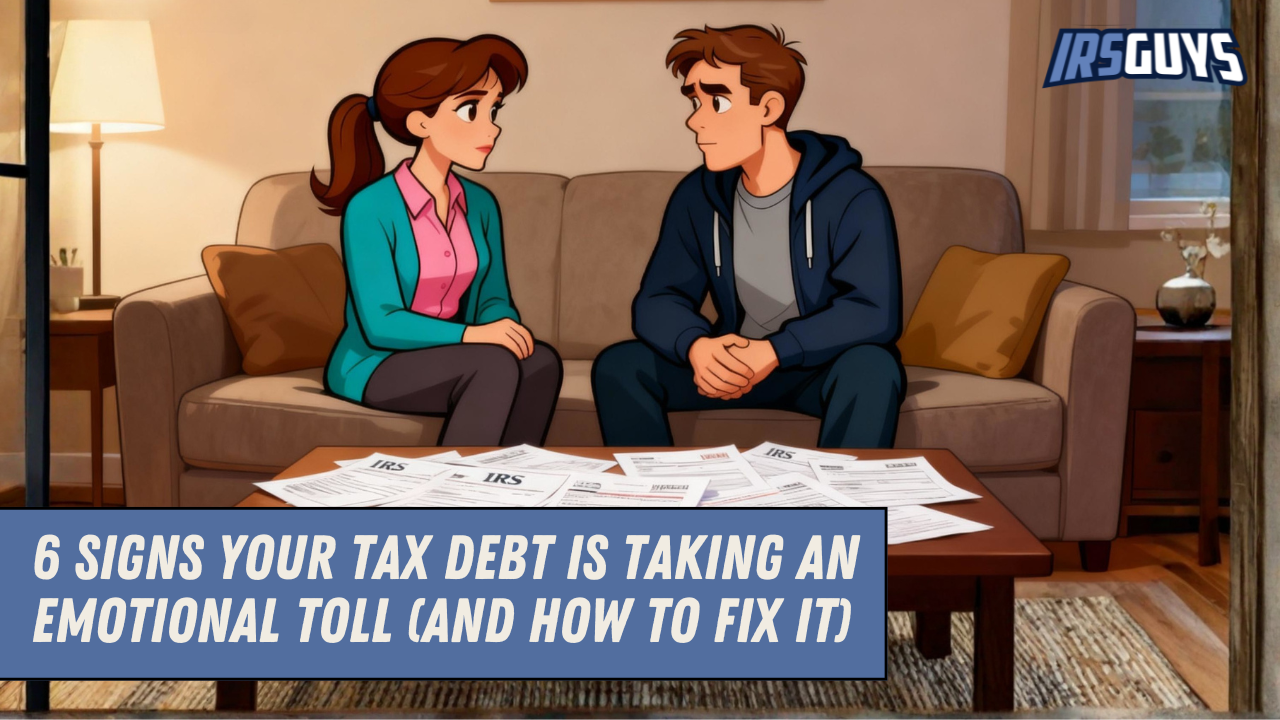
Debt, regardless of its origin, can cause significant stress for individuals who are responsible for repaying it. But owing tax money is different. It often feels much heavier than owing money to a credit card company or a store. This is because of who you owe the money to: the Internal Revenue Service (IRS). Unlike a private company, the IRS has the full backing of the government to collect the money you owe. This unique power creates a heavier sense of worry and stress than typical debt.
Chronic stress from a looming tax debt can really hurt your well-being. The constant worry about money affects how you think and behave, ultimately lowering the quality of life for both you and those close to you. Learning to spot these signs is the first big step you can take to fix the problem.
Sign 1: Physical Pain and Illness
The psychological strain imposed by unresolved liabilities frequently translates directly into physiological symptoms. Individuals experiencing debt-related stress commonly report recurrent physical ailments. These physical signs serve as the body’s alarm system reacting to chronic anxiety and tension.
Sign 2: Poor Sleep and Insomnia
Anxiety about tax debt can lead to sleep disturbances. Worrying about the future, such as the IRS taking assets or the amount you owe, fills your mind.
- This constant worry occupies the mental space you need to relax and get a good night’s rest. This often leads to restless nights or a chronic inability to sleep.
- When you resolve your tax problem, the mental burden is lifted.
Sign 3: Trouble Thinking Clearly
Constant stress and worry about debt cause your mind to become overloaded. Constantly thinking about tax problems makes it difficult to focus on other things.
- This strain makes it difficult to focus, reduces your ability to think clearly, and impairs your ability to perform daily tasks or manage personal responsibilities.
- By starting to fix the issue, you can begin to calm your mind. You can then use that energy on more productive things in your life.
Sign 4: Running Away from the Problem
Trying to avoid the problem is one of the most damaging ways to cope with debt anxiety. People often ignore letters from creditors, struggle to save money, and avoid calls from unknown numbers.
- Unfortunately, this behavior exacerbates issues with the IRS. Ignoring official notices is dangerous because they contain critical deadlines and outline how the IRS will take action next.
- If you do nothing, you will guarantee that interest and penalties continue to accumulate. This eventually leads to severe consequences, such as seizing your paycheck or bank account, which can destroy your financial stability. You must replace this anxiety-fueled inaction with fast, decisive steps.
Sign 5: Feeling Bad About Yourself
Financial problems and the inability to pay the government often cause deep feelings of guilt, hopelessness, or the feeling that you are not good enough.
- Unpaid taxes can erode your confidence and sense of control over your own life.
- You must confront the debt and take action, like asking for a payment plan. Doing this is key to reversing the emotional harm. Successfully dealing with the debt helps you feel a sense of accomplishment and rebuilds your self-esteem.
Sign 6: Hiding Financial Secrets
Many people hide financial secrets from their spouses or partners. This is often because they feel ashamed, want to feel in control, or do not want to share the worry.
- Hiding tax issues, keeping papers secret, or not telling your spouse about IRS letters makes you feel alone. You end up carrying the emotional burden on your own.
- This secrecy is especially risky if you filed a joint tax return, as both spouses are usually responsible for the debt. Hiding the problem can remove your access to necessary support and lead to unexpected financial trouble for your partner.
Bottom Line
All these signs are connected in a harmful cycle: worrying about tax debt causes you to avoid the problem, which leads to more penalties and threats, making you feel even more trapped and helpless.
IRS Guys is coming together to change that experience.
Built with intention and attention to your specific tax debt resolution needs, IRS Guys is designed to give you clarity and a sense of control before fear dictates your decisions. The goal is informed action, peace of mind, and a reassuring path forward.
Get Ready to Take Control with IRS Guys