Getting a letter from the IRS is like getting a text from your bank that says, “We need to talk.” Your heart skips a beat, and you start replaying every financial decision you’ve ever made. The truth is, not every IRS notice is a disaster waiting to happen, but some of them absolutely cannot be ignored. These are the ones that can snowball into bigger (and more expensive) problems if you push them aside.
So before you shove that envelope into the junk drawer, here are three IRS notices you need to pay attention to right away.
Note: While all notices demand attention, the following three categories represent critical junctures in the IRS’s compliance process. Ignoring any of these is a significant mistake.
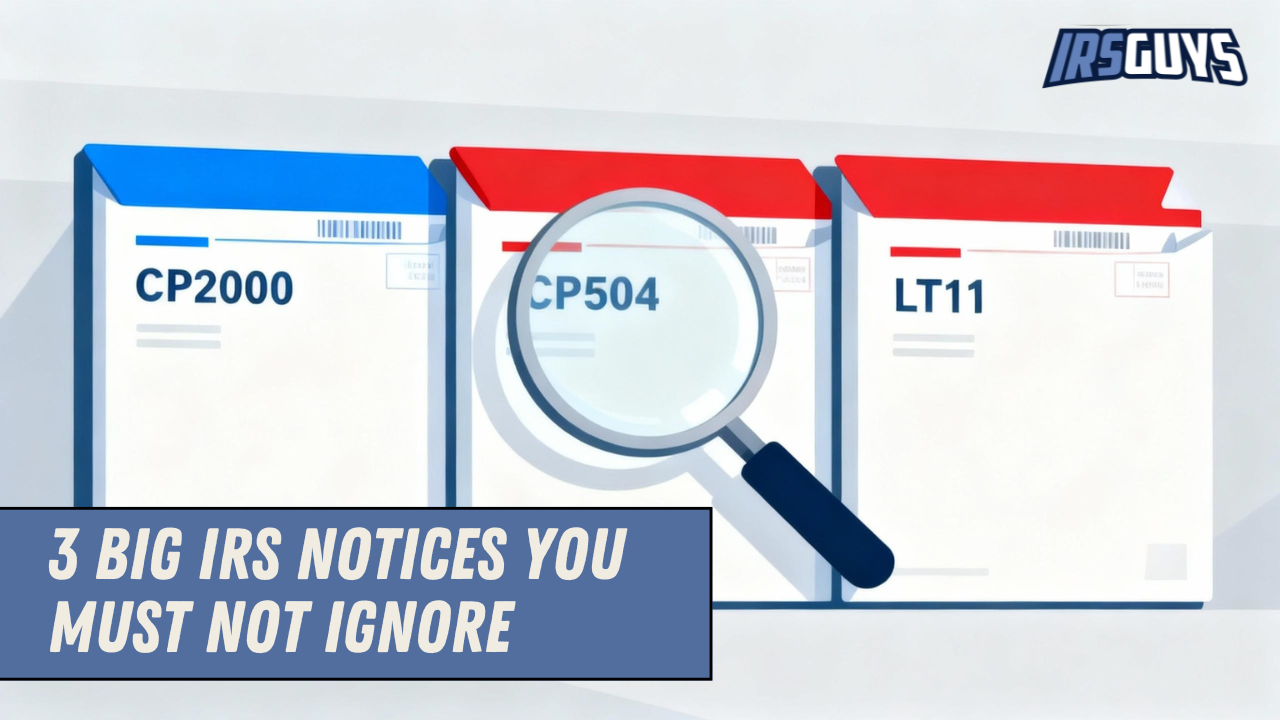
Notice of Underreported Income (CP2000)
This is one of the most common notices you might get. It is automatically sent by the IRS’s computer systems. It is not a bill, but it is a proposal to change your tax return. A CP2000 is sent when the income you reported on your return does not match what a third party, like your employer or a bank, reported to the IRS on forms like a W-2 or 1099. The notice will show you the changes the IRS thinks you need to make and the information they used to find the problem. When you get this notice, you have a few choices: you can agree with the changes, disagree and provide proof, or file an amended tax return.
Notices of Unpaid Tax (CP14, CP501, CP504)
These notices mean the IRS is moving forward with trying to collect a debt. A CP14 is the first notice you will get asking for payment for an unpaid tax balance. If you do not respond, the IRS will send a CP501 as a first reminder. After that, a CP503 will be sent as a second reminder, which may mention that a lien could be placed on your property. The CP504 is a more urgent notice. It is a “Notice of Intent to Levy,” which is a clear warning that the IRS may take your state tax refund or other assets to pay your debt.
Final Notice of Intent to Levy (CP90, CP297, LT11, Letter 1058)
This is the final warning before the IRS takes your property. This notice tells you that the IRS plans to seize your assets, and it also lets you know you have the right to a Collection Due Process (CDP) hearing. This is your last chance to work out the issue with the IRS before they take action. Ignoring this notice is a huge mistake because you give up your last chance to appeal before your property is taken.
Other Common Notice Categories
Beyond the critical notices, other types of correspondence also demand careful attention.
- Audit Notices: The IRS sends these notices to begin an audit of your tax return. They might ask for documents by mail or want to meet with you in person. If you ignore an audit notice, the IRS will make its own changes to your tax return and will then try to collect the amount it believes you owe.
- Notices about Credits and Refunds: Some notices, like a CP12, may seem like good news because they say you have a refund or credit. However, you should still check them carefully. A notice like the CP75 for the Earned Income Tax Credit may ask for more documents. If you don’t provide them, you could lose the credit.
Bottom Line
The entire IRS notice system is a predictable process. The IRS is following a clear path from a minor issue to a major one. Each notice is a step on this path. When you ignore an early notice, you are not avoiding the problem. Instead, you are inviting the next, more serious notice.
Got an IRS Issue You Need Help With?
IRS problems don’t happen overnight, and neither should the decisions you make about them. IRS Guys is designed to give you clarity, direction, and confidence before moving forward.
IRS Guys is here to help you feel informed, grounded, and ready for what’s next.
Get Ready to Take Control with IRS Guys